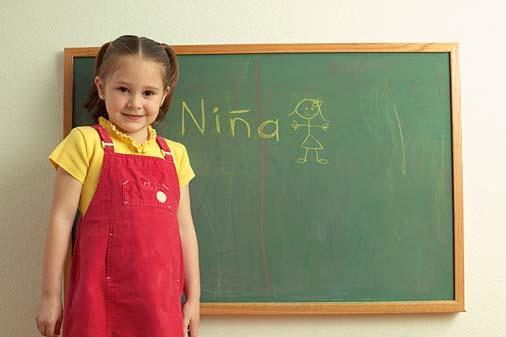






Homeschooling is becoming more and more popular as parents start to recognize the benefits of such an endeavor. There are many advantages to making the choice to educate your child at home. As you work through gearing up for the process of homeschooling your child, it is essential to have some sort of “checklist” that will enable you to make sound choices, take care of all the details, and get the kids ready for a fresh new start with you as their teacher. This is a very challenging, yet exciting time in the lives of parents and children as well. The following will identify some items that should be on your checklist for beginning homeschooling.
Filed under Homeschooling by More4kids
Site Information and Navigation:
The Section of our site is dedicated to children's education. Here you will find resources on learning including: music, homeschooling, reading and writing tips, back to school planning, information for teachers and educators, and much much more. The main categories for this section is on the right hand site. To navigate to other parts of our site click on the links at the top of this page or on the bottom.

Check out our Beginners Guide to Homeschooling
Filed under News by More4kids Inc
For the parent who is considering the option of homeschooling their child, the initial decision of selecting a homeschooling method may prove to be a challenging one. There are many selections to choose from when it comes to homeschooling styles. If you are one of these parents, the choice of methods for educating your child at home will depend on many different factors. These factors depend on your values, beliefs, goals, the learning style of your child, and numerous other factors. Here, we will review the many homeschooling methods that you can elect to use.
Filed under Education, Homeschooling, Learning by More4kids
Perhaps one of the biggest benefits of homeschooling is in Your Child’s Achievements
There are many reasons why more and more parents choose home schooling instead of the traditional schools; the benefit of home schooling is when your child is able to succeed in life and you know you had a little bit to do with those achievements.
Filed under Homeschooling, Learning, News by More4kids
By Ann Bowers
Where can I find ideas on how to home school?
-
The Internet is the best place to start. Type in “Homeschooling ideas,” “Lesson plans,” “Crafts,” “Projects for kids,” “Teaching materials,” “Ideas for teachers,” or any subject topic, such as “ocean,” “frogs,” “history of Florida,” “War of 1812,” “using punctuation,” “how to write an essay,” etc. and do a search.
Filed under Homeschooling by More4kids Inc
Having decided to oversee your child’s education at home, the first consideration is that how to get inexpensive home schooling material. This includes many kinds of items: books, illustrated publications for children, games that teach about realities, audio and video material, etc. With a working Internet at home, teaching via computer is the latest means of home schooling your kid.
Filed under Homeschooling by More4kids Inc
by Ann Bowers
Filed under Homeschooling by More4kids Inc
by Ann Bowers

- Failure to focus. Each year of education should focus on a set of topics that have specific objectives for learning. New topics should be introduced every year, along with added depth of study of topics that were introduced in prior years. Each topic should become more challenging each year, not just the same as it was the year prior.
- Too much repetition. Generally, a topic should be studied for three to four years. Basic multiplication does not have to be taught every year from age 7-13. The child should have mastered the multiplication tables (1-12) by age 10 or sooner. That’s four years (ages 7, 8, 9, 10) of learning them. Failure to do so may indicate a lack of sufficient effort and study time or a learning disability.
More on Homeschooling and the 7 Common Mistakes When Teaching Math
Filed under Homeschooling, Math, News by More4kids
by Angie Shiflett
Teaching the autistic child or homeschooler can be quite a challenge. This disorder is considered to be “neurobiological” in nature. When a child experiences autism, the skills that are social, physical, mental, and even those that are directly related to language are often affected. While this condition is most often diagnosed in boys, girls can suffer from the condition as well. If you are a learning coach for your child, and you homeschool your child, you will likely face numerous challenges on a daily basis. However, as disheartening as it may sometimes seem, it is completely possible to be successful in teaching the autistic child.
What Is Autism?
Autism is considered to be one of “Pervasive Developmental Disorders” that impact the ability to properly develop. This is actually a very complex condition that generally comes out in the early years of a child’s life. In cases of autism, the brain of the child does not function appropriately. As a result, it is extremely difficult for the child to communicate appropriately, socialize in an appropriate fashion, and even learn according to the stages of development. Studies have indicated that for every 150 births that occur, there will be at least one child that is diagnosed with autism – although it may not occur until several years after birth.
Teaching Tips
1. If your child is autistic, it is absolutely essential that you obtain teaching tips from the doctor that sees your child on a regular basis. The doctor may even be able to refer your child to a specialist that is noted in working with and tutoring children with autism. Your doctor and any referrals to specialists can prove to be a valuable resource if you are the learning coach of an autistic child.
Filed under Homeschooling by More4kids
by Ann Bowers
Filed under Homeschooling by More4kids Inc
by Ann Bowers
Math skills can start to be developed at a very early age. Here is a quick guide or cheat sheet that home schoolers can use that shows what math skills to work on based on your childs age.
Ages 1-3
- Count to 5.
- Put objects in order by size.
- Sort objects by shape and color.
- Learn the meaning of math vocabulary words, such as: big, small, large, tiny, round, etc.
- Learn to respond to math vocabulary commands such as: “Give me some pennies.” “Give me more pennies.” “Give me fewer pennies.” “Put the penny (in, above, below, beside, inside, outside, underneath, over) the glass.” “Put the penny between the glasses.”
- Learn concepts about volume by playing with rice or sand and various kinds of containers.
- Learn concepts about volume by playing with water and various kinds of containers.
Filed under Homeschooling, Math by More4kids