





Education - Homeschooling and Learning Resources Welcome to More4kids, Education and Homeschooling!

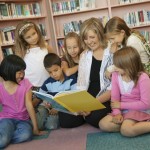
this visual learner is reading a bookWhether or not you homeschool your child, it is important that you have a good understanding of the different learning styles. This will not only help you to understand the method that your child uses to learn, but it will also help to customize the method that you use to teach your children. As a parent, don't assume the way you learn, is the way your child learns best. If you are able to teach in ways that compliment a specific learning style, you will find that your child is able to retain more information over a longer period of time. You will also find that learning is more exciting for both you and your child. Learning how your child learns can open up many exciting opportunities for them. Here, you will gain an understanding of the importance of learning styles. More on Understanding the Importance of Learning Styles

by Angie Shiflett

confident homeschooled childBuilding confidence in your homeschooler is an essential component to instilling success in the child. It has been established that the child who has a high level of confidence will excel in the area of academics, socialization, and emotional intellect. As a parent who interacts with their child on a continuous basis, it is important that you know and understand the value of assisting your child achieve a positive sense of self – not only in the homeschool classroom, but other areas of the child’s life as well! Here, I will provide some effective strategies for building confidence in your homeschooler.

Knowing What NOT To Do

In order to learn the things that you should do when it comes to helping your child develop confidence, knowing what NOT to do is essential. The first thing that you should avoid at all costs is negativity. This is negativity in response to their actions, the actions of others, and even the actions of yourself. Children often reflect ideas, thoughts, and behaviors that are exhibited in their environment. For example, if you slip up and refer to a child who attends a public school as making a “stupid” mistake by failing a test that could have been studied for, and your homeschooler slips up and does not take the time to study and does the same, they may automatically believe that they, too, have made a “stupid” mistake. Be sure to remain positive in every single way that you can. More on Building Confidence in Your Homeschooler

test-taking.jpgIf you are a parent that has been noticed low test scores in your child’s academic work, it may be time to learn how to help your child overcome test anxiety. This is especially true if you are certain that your child studied for the exam. In a typical school day, several students will experience at least a small bout of anxiety when it comes to testing to one degree or another. However, if this rolls over into general performance complications, it could be an indication that test anxiety is being experienced. In this educational how-to guide. Here are some strategies that can be used to successfully help your child overcome test anxiety.

Step 1:

There are many different things that can lead to the onset of test anxiety. Lacking in the area of preparation is often a major culprit. When a student is preparing for an exam, they should devote a certain amount of time each day to studying the material that the test will cover. Time management skills often play a large role when it comes to actually studying, and comprehending the material. If your child tends to procrastinate a little in this area, then attempts to absorb all the material in at once, it is quite likely that they will encounter anxiety when the actual test is put on their desk.

More on How to Help Your Child Overcome Test Anxiety

learning the alphabet with alphabet blocksThere are many fun and creative ways to teach your child the alphabet. It has been determined that learning the alphabet, as well as developing an awareness for phonics are the keys to success when it comes to successful readers. Successful readers have been found to be more academically inclined and successful in their studies, stable emotionally, and proactive when it comes to detail, and instructions. If you would like to open new doors for your little learner, one of the best ways to start is by teaching them their ABC’s. It is important to understand that young children are often motivated and learn more when they are taught in a playful and fun manner. If you keep that in mind, you are quite likely to experience rapid success in your endeavors. 

More on Creative Ways to Teach Your Child the Alphabet

Teaching kids colors Our eyes are attracted to colorful things. Color gives life to paintings, drawings, photographs and television. If everything were in black and white there wouldn’t be much to characterize what we see. Here are five great suggestions for teaching your children about colors:
 

  1. Teach colors through flash cards. Flash cards contain pictures of items in various colors. For example, if it was a picture of a bear it would be brown. The colors are shown as they would be in the real world. You wouldn’t want a card that shows a yellow sky or a red tree. The colors on a flash card are very bright so this is a good place to start. Say each color and let the child repeat after you.

More on Tips for Teaching Colors

young boy studying for a big testSchool time is upon us again, and that means tests! I don’t remember having tests until late elementary school, but even first and second graders may have spelling tests now. And let’s not forget the spring-time ritual of standardized tests! Whether your children breeze through tests or struggle a little more, you can help them prepare for tests and make the whole test-taking experience more positive.

Preparing for the test…

The main key to preparing for tests is to know the work and study ahead of time. Get your child a planner so she knows when tests are and won’t forget about them. Cramming the night before will just lead to “information overload” and make your child nervous (not to mention overly tired the morning of the test). Many teachers give study guides so your children should know exactly what the test will cover and have all the information they need to study in one place. You can also use the study guide to quiz your child.

More on School Time - Helping your child prepare for tests

by Ann Bowers

girl having fun with mathHomeshooling can be fun, and whenever possible, learning math should also be fun. There are many games that teach math skills, such as: War (using a deck of cards), Monopoly, Blackjack (21), Yahtzee, Chess, and others. Flash cards can be used to create games such as Concentration, Gin Rummy, and others. Bingo and Go Fish games are great for ages 5 and up. You can make simple Bingo cards for children ages 3-4 to help them recognize numbers, colors, and shapes. Any game that uses a board and/or dice will help children learn to count. 

There are tons of computer games that make learning basic math facts and concepts exciting and enjoyable. Most children love using the computer, so encourage them to use any appropriate learning game. There are programs that teach entire subjects, such as the CD program “Fractions.” The computer provides fabulous visuals of fractions and manipulates them in ways that create understanding of this difficult topic. Also, the computer is endlessly patient if the child need re-teaching of any subject. 

More on Math Teaching Tips for the Homeschooler

Filed under Learning Skills, Math by

mother reading to her sonReading readiness is defined as the time when a child transforms from being a non-reader to a reader. This can be a tough transition but is very rewarding. Not only are your children very proud of themselves as they learn to read, but children who learn to read well are better learners throughout their school years. Here are some tips to help your young elementary student become a better reader.
New readers
Children who are in kindergarten and first grade are just beginning to learn to read. You can help children this age by:

More on Improving Your Childs Reading Skills

mom reading to childMost of us can remember the first book we ever read. Can you? Words are incredibly powerful. They invoke images of far away lands; scary castles; or princesses looking for their knights in shining armor. They can also become friends. Yes, books are the window through which your child sees and experiences different worlds; viewpoints; the fantasies and realities of life. So what are the benefits of reading to your children? Oh, so many, one could write a book on the subject.

More on The Benefits And Joys Of Reading To Your Child

All parents want their children to learn their ABCs. For both children, and for that matter adults, leaning is a heck of a lot easier, and retention longer when it is fun! Here are some creative ways to teach your toddler their ABCs.

Contrary to what people may think, learning ABCs is not solely relegated to preschool. It begins much earlier than that; in the womb, in fact. We all know that talking to or playing soothing music for the unborn child does, in effect, produce results. 

More on Creative Ways to Teach Your Child Their ABCs

by Ann Bowers
Reading comprehension is often considered to be difficult to teach. Here is a basic technique that should be used to teach reading comprehension and higher level thinking skills.  
Prediction, Summarization, Previewing (Higher Level Thinking Skills) 

Before starting to read a book, discuss the cover with your child and the name of the author. Ask your child to predict what might happen in the book. Preview the characters your child will be reading about and briefly summarize the plot for him/her. Previewing gives the child a “head start” in understanding the content. 

More on Reading Comprehension and Higher Level Thinking Skills for Homeschoolers