




 by Angie Shiflett
Many homeschooling families face the challenge of teaching their child to read. While this is a very exciting time in both the life of the child and the parent, it can present some obstacles. If you are reading this article, you have probably already passed the stage of teaching your child the alphabet and how to recognize letters. Chances are, your child can even write a few letters – possibly even their name. Now, it is time to move on to the ever-popular sight words. You will learn important information regarding these words, and how to implement exciting games when teaching sight words. Whether or not you are a homeschool parent these games can be a great way to help your child learn to read.
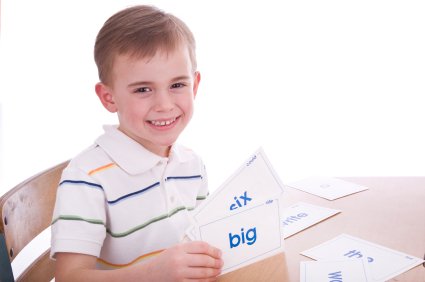
The concept behind sight words is actually quite simple. These are words that your homeschooler will encounter frequently throughout their life. These words are generally used over and over again in various types of texts. Sight words are commonly referred to as “frequent” words. When your child learns to recognize and read sight words, it will enable him or her to read more easily and fluently. The following represents a small list of the words that are considered to be the most common sight words:
- And
- About
- After
- At
- Are
- An
- Be
- Been
- Before
- Big
- But
- By
- Can
- Come
- Came
- Could
- Cut
- Did
- Do
- Don’t
- Eat
- Every
- Here
- Go
- Had
- It
- Just
- Know
- Make
- Put
- Said
- Say
- So
- Tell
- That
- Then
- Than
- Very
- Was
- Well
- What
- When
- Why
- Will
- Would
- Yes
- Your
- You
If you would like to have access to the “official” list of all the sight words, you should visit http://www.readingpains.com/resources.html and click on “The Dolch List of 220 Sight Words”. This resource can prove to be especially helpful during this stage of your homeschoolers reading development.
One of the first things that you can do when it comes to exciting games that you can implement when teaching sight words to your homeschooler is to teach word families in fun interactive play. There are many methods that you use to do this, and make the learning experience fun and exciting for your homeschooler. The first method is to gather up a bunch of craft sticks, or Popsicle sticks. Start with a simple sight word, such as “all”. Get a marker and write the word “all” on the stick. Then, gather up other sticks and write the words that are in the same word “family”, such as “ball”, “call”, “fall”, “hall”, “mall”, “small”, and “tall”. You have now created a word family.
You should make at least three different word families by writing the words that belong to each on the wooden craft sticks. You can use the family that include “be”, “he”, “me”, “we”, and even the one that ends in –at, like “bat”, “cat”, “fat”, “mat”, “sat”, and so on. Once you have the different families of words, you may want to allow your child to draw little faces on the wooden craft sticks to make it more realistic. Then, you should designate an area where you can hide the sticks. You can set out simple bowls with an index inside that specifies the word family. It could say “The –all Family”, and so on. Allow your child to search for the word figures. When they find one, have them read the word, and decide what family that word is a part of.
http://www.mrcpl.org/literacy/lessons/sight/index.html
Remember, kids learn best when they don’t realize they are learning. So have FUN!!!
Biography:
Angie Shiflett is a content specialist that focuses on writing on an assortment of topics. Currently, her passion is homeschooling. She has been homeschooling her children through The Connections Academy for two years now. Both her and her husband are able to remain at home with their children in order to educate them. They place a high emphasis on family, and dedication to the importance of a proper education.
This article is the copyright of More4kids Inc. No part may be copied or reproduced in any form without the express permission of More4Kids Inc © 2008 All Rights Reserved




Add Comment